
Tatay Oly: A Lifetime in Every Pair
In Marikina, shoemaker Rolando Santos carries a family inheritance in his hands—and hopes another generation will keep it alive.
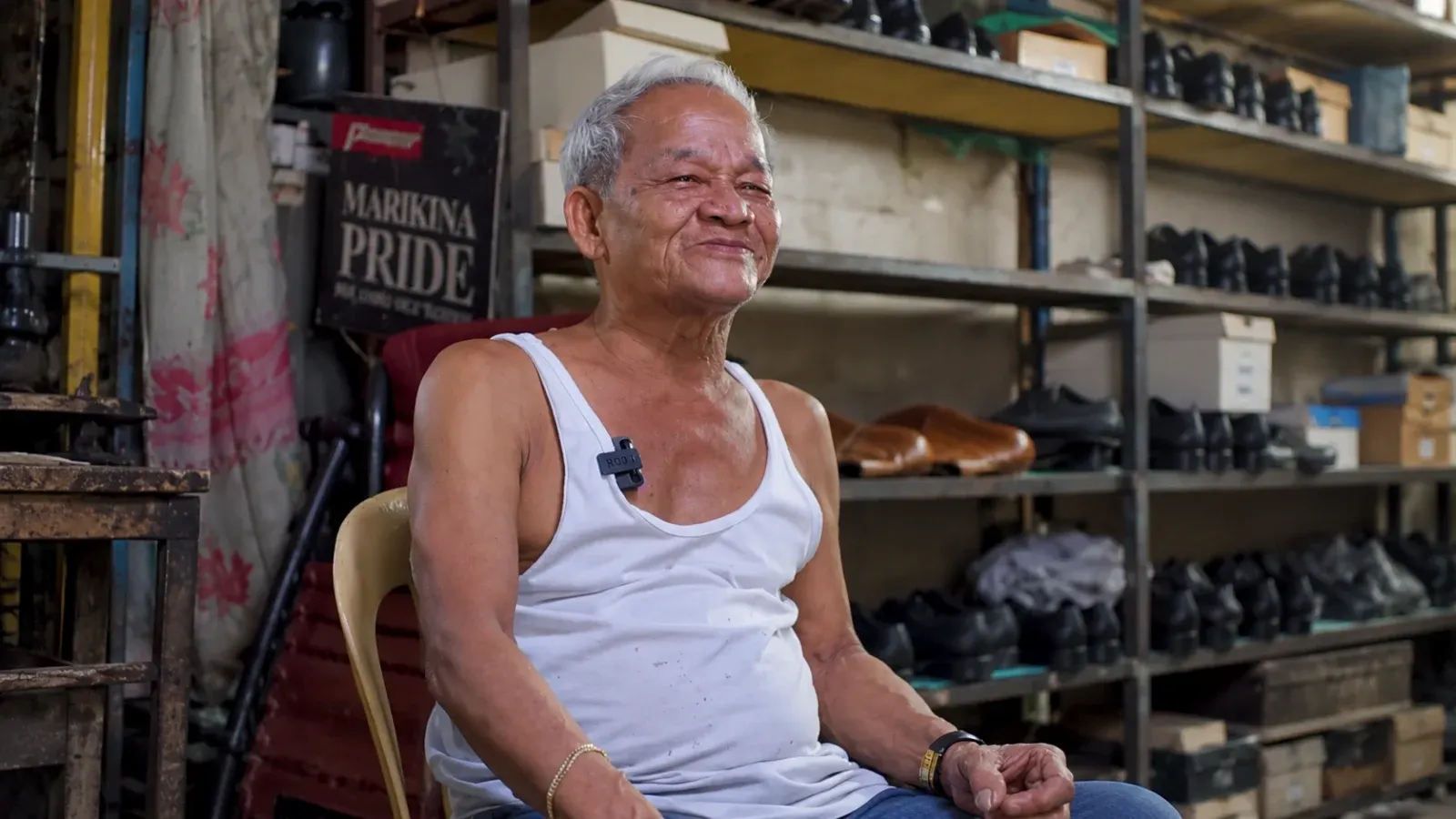
Inside Tatay Oly’s workshop, shoes line the shelves behind him. There are dark leather pairs, brown boots, boxes and tools sharing a modest space. In the opening images of Sapatero, a documentary hosted by filmmaker Jack Logan, the camera moves close enough to reveal a label inside a polished shoe: “Tatay Oly. Marikina Pride.”
The words introduce a craftsman whose life has become inseparable from the city’s best-known industry.
His name is Rolando Santos. Most people know him as Tatay Oly, using the Filipino word for father as a familiar expression of affection and respect. In the documentary, he says he began making shoes at ten. He was 75 when the interview was filmed—a working life spanning more than six decades.
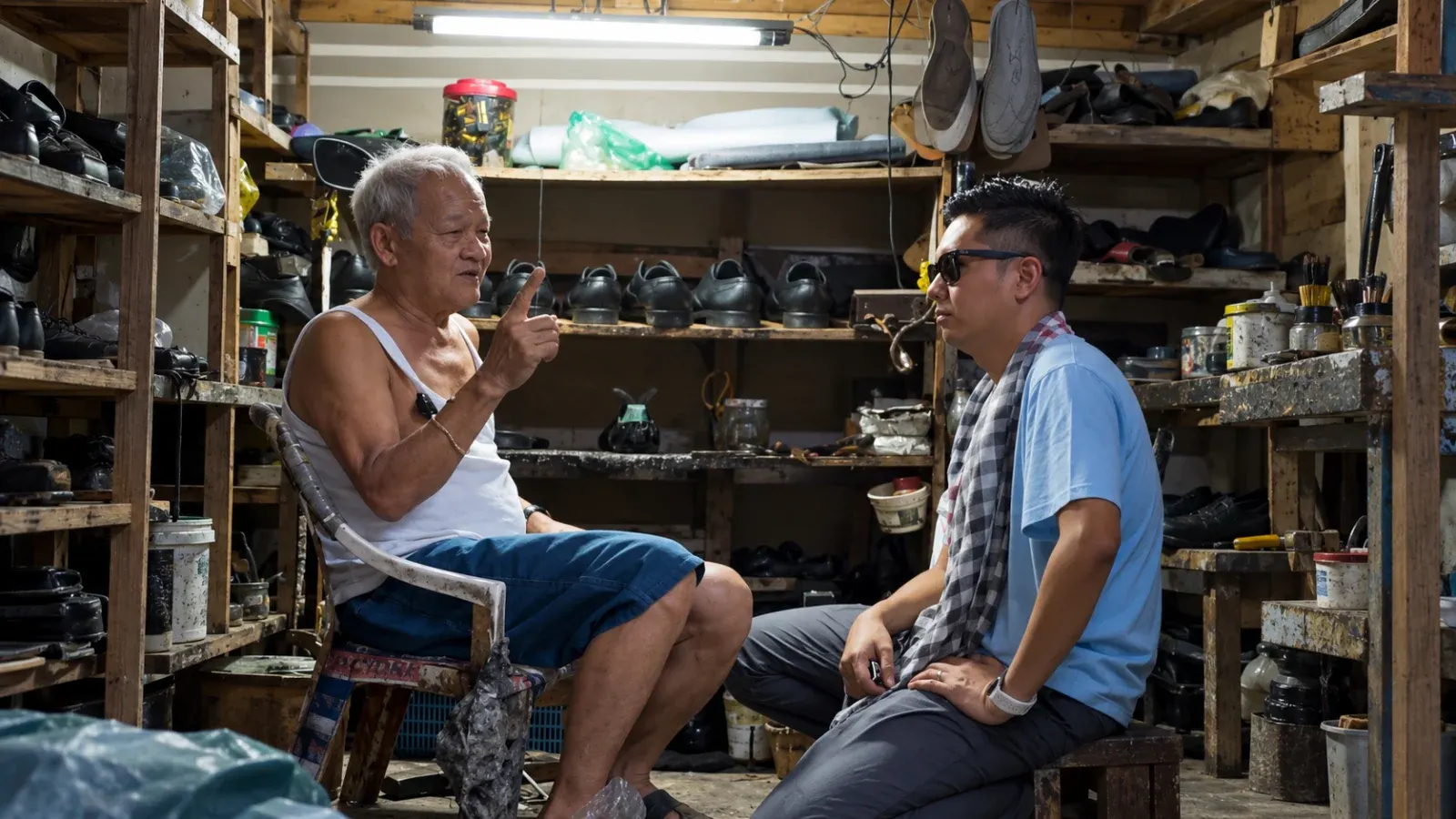
For Logan, the visit is also a return to family history. He introduces Santos as his grandfather’s younger brother and recalls growing up around workshops like this one. Their conversation unfolds among objects that belong to both a livelihood and a childhood: leather, scissors, machinery and shoes waiting to be finished.
Marikina’s association with shoemaking stretches back to 1887. Its pioneers included Laureano “Kapitan Moy” Guevara, whose early work helped establish the industry that would shape the city’s identity. Generations of craftspeople subsequently made that reputation their daily responsibility.
Santos inherited his place in that tradition from his father. Toward the documentary’s conclusion, he describes shoemaking knowledge as the inheritance his father could give him. What remained was a skill through which he could work, earn and teach others.
That inheritance is visible in the way he discusses materials. He explains that experience has taught him which leather is durable and which is unsuitable for a shoe. As Logan tries cutting a piece himself, the camera brings attention to the physical decisions hidden inside a finished product.
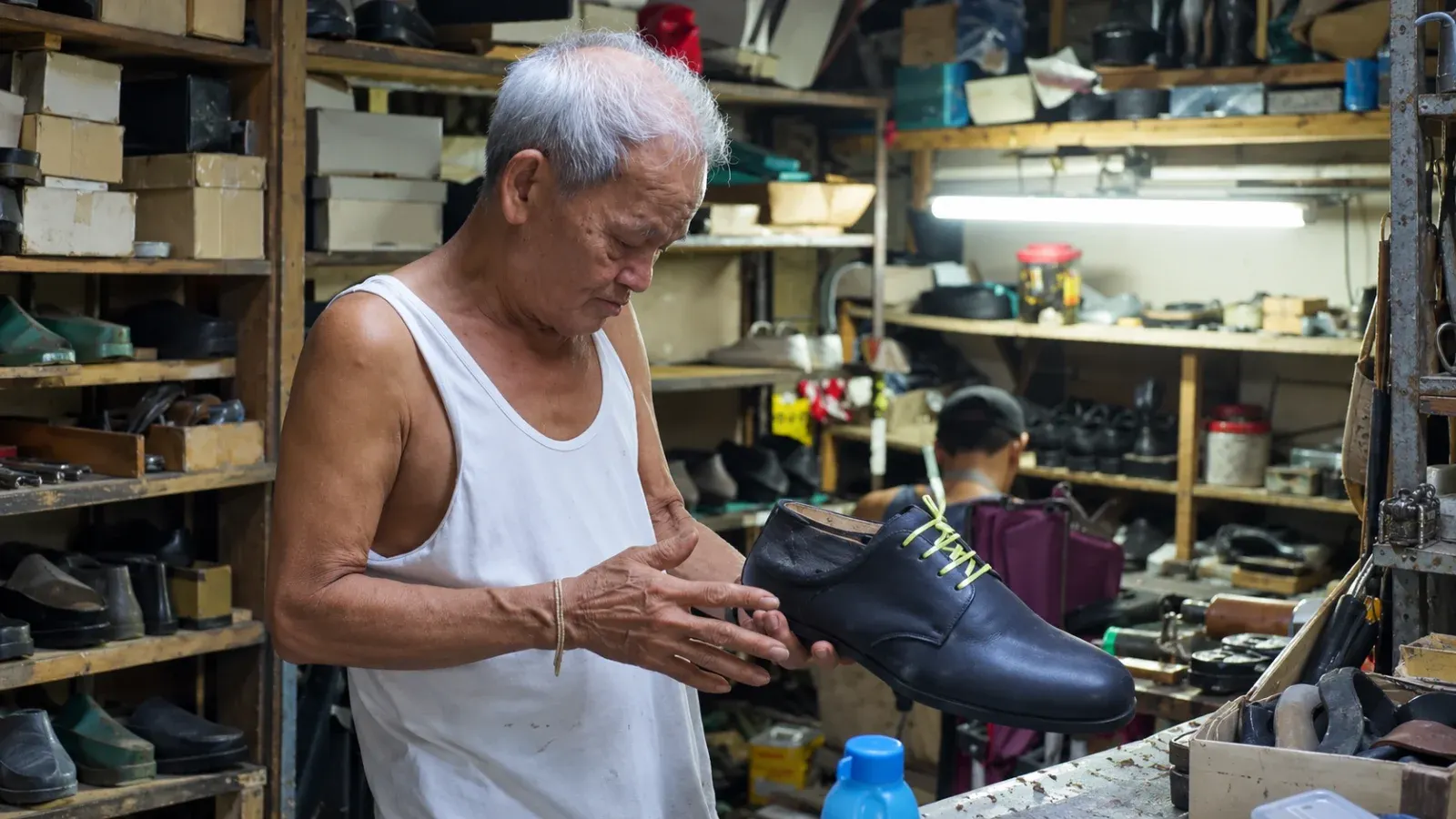
A customer sees the shape, color and shine. The maker must also understand what will happen when the shoe bends, bears weight and is worn repeatedly.
Santos speaks firmly about using appropriate materials. He objects to substituting inferior components simply to increase profit. His satisfaction comes from completing a customer’s request properly and being pleased with what he has made. In his account, quality is a responsibility carried through the work.
There is humor in the workshop, too. In one sequence, he taps his knee with a shoemaker’s hammer while discussing the habits of the trade. Logan reacts to a demonstration that makes years of physical familiarity briefly, vividly apparent.
But the film also allows a more difficult truth to emerge.
Santos says that upon reaching 75, he had begun wanting to stop making shoes. He continued because the work supported him.
That admission complicates the comforting image of an elderly artisan sustained entirely by passion. Pride can remain even when the body wants rest. A person may love the skill that has defined his life and still wish he could afford to put down his tools.
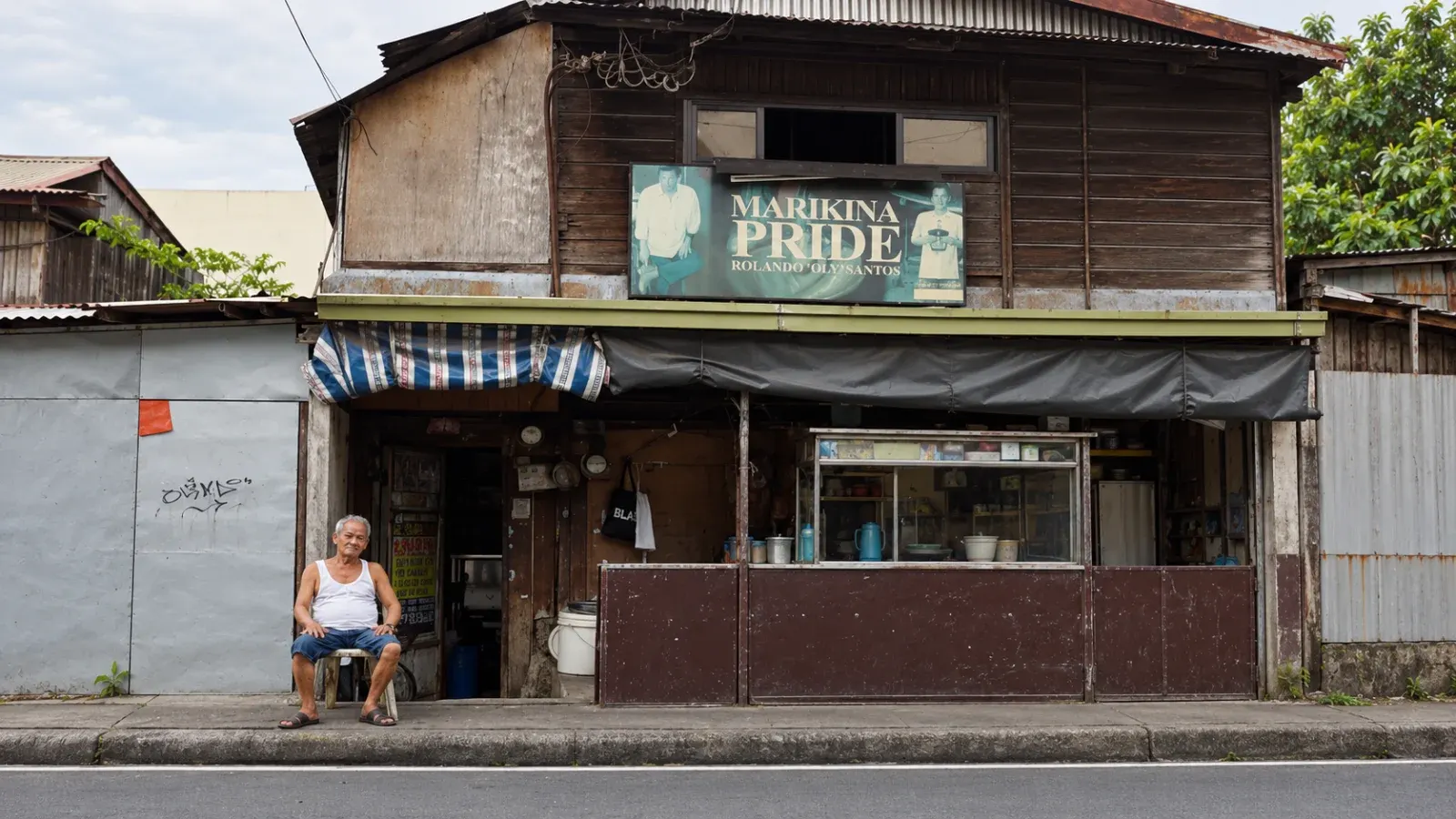
His struggle also belongs to a wider concern expressed throughout the documentary: whether Marikina’s makers can sustain their work amid competition from inexpensive imported footwear. Santos’s answer centers on maintaining standards, even when shortcuts might make production faster or more profitable.
The question of succession is just as pressing. He recalls teaching other shoemakers and seeing them establish themselves independently. Knowledge has already passed through his workshop into other hands. Whether that knowledge continues to provide a viable livelihood will help determine what survives.
For a younger person considering the trade, admiration alone cannot answer practical questions about earnings, customers and a future. Preserving craftsmanship requires conditions in which learning it makes sense.
By the end of Sapatero, Santos’s attachment to the work is unmistakable. He speaks of his father’s teaching as something he still carries within him. The documentary closes with a hope that those he has trained will continue the tradition.
The label inside his shoe reads “Marikina Pride.” His story asks what responsibility comes with those words.
A city can celebrate its shoemakers through photographs, festivals and declarations of heritage. The lasting measure is whether their work is valued enough to sustain them—and whether the next pair of hands has a reason to learn.
This feature draws on interviews and scenes from “Sapatero,” an Alagwa documentary hosted by Jack Logan. Ages and personal circumstances described from the film refer to the time of recording.
This video loads from Facebook when you choose to play it.



Join the conversation
Sign in to comment