
Alden Richards Under Fire: Allegations Are Not Proof, And Celebrity Support Is Not Exoneration
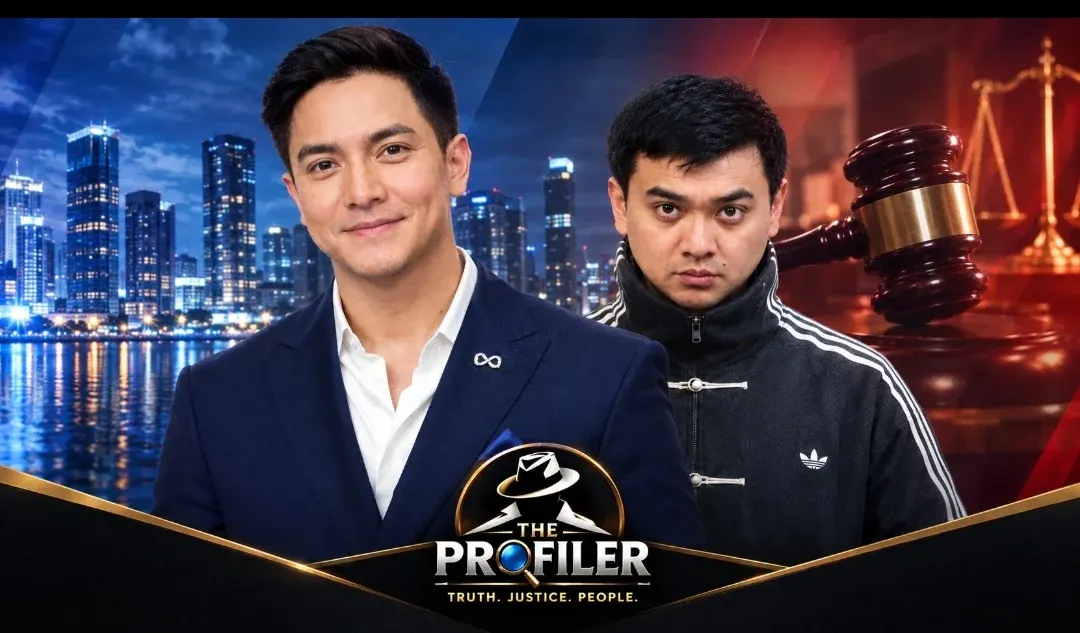
THE PROFILER | NEWS ANALYSIS & COMMENTARY The Alden Richards–Xian Gaza controversy highlights the importance of evidence, responsible reporting, and accountability in the age of social media. The Profiler examines why allegations must be verified, reputations must be protected, and public judgment must never replace facts.
About 15 min read
ORIENT GAZZETE | NEWS ANALYSIS & COMMENTARY
When social media becomes a courtroom, reputations can be damaged before evidence is examined. The controversy involving Alden Richards and Xian Gaza raises serious questions about accountability, responsible reporting, the limits of public opinion, and the price of an accusation.
Harold C. de Mesa | The Profiler
The controversy surrounding actor Alden Richards and social media personality Xian Gaza has become more than a showbiz talking point. It is now a public test of how Filipinos distinguish allegations from established facts, how public figures defend their reputations, and whether social media personalities can be held accountable when their claims reach millions of people.
At the center of the controversy are allegations involving a condominium unit and luxury wristwatches. Gaza reportedly claimed that a wealthy couple allowed Richards to use a condominium during the pandemic and that the actor allegedly failed to leave the property when expected. He also alleged that Richards had borrowed luxury watches, with several supposedly remaining unreturned.
These are serious claims. But as of the reports reviewed for this article, the allegations have not been independently established through publicly presented documentary evidence, and the identities of the alleged owners have not been publicly confirmed in the reports. Gaza has reportedly maintained that his claims came from sources in the entertainment industry, but saying that information came from multiple sources is not the same as presenting evidence that the public can independently assess.
That distinction matters.
A social media post can trigger a controversy within minutes. Establishing what actually happened can take considerably longer.
THE ALLEGATION IS NOT THE VERDICT
In the court of public opinion, the person who speaks first can sometimes control the narrative before the other party has an opportunity to respond.
Once an accusation becomes viral, repetition can create the illusion of confirmation. People begin sharing screenshots, adding interpretations, connecting unrelated details, and treating speculation as if it were already established fact.
But repetition does not turn an allegation into evidence.
A claim involving borrowed property, unpaid obligations, or unreturned valuables should be examined through verifiable information: the circumstances of the alleged arrangement, relevant communications, ownership records, receipts, agreements, demands for the return of property, and statements from people with direct knowledge.
Not every private arrangement necessarily produces a formal contract. Nevertheless, the absence of publicly available documents means outsiders cannot responsibly declare that the allegations have been proven.
The same standard applies in the opposite direction. The absence of public evidence does not automatically establish that an allegation is false. It means that, based on what has been made available, the public does not yet have sufficient grounds to reach a definitive conclusion.
That is the difference between being skeptical and being biased.
ALDEN'S FRIENDS CAN VOUCH FOR HIS CHARACTER—BUT CHARACTER IS NOT A COURT RULING
As the controversy spread, several personalities and people in the entertainment industry expressed support for Richards. Sparkle Artist Center publicly stood by its artist, while other celebrities shared accounts of his generosity and good character. Reports also cited accounts of his charitable assistance to others.
Their support is relevant in understanding why many people continue to trust him. Personal experiences can offer meaningful insight into someone's behavior, relationships, and values.
However, there is a legal and behavioral distinction between testifying to someone's character and establishing the facts of a specific disputed transaction.
A friend may sincerely believe that Richards is incapable of doing what has been alleged. Another person may have personally experienced his generosity. Yet neither statement, standing alone, proves whether a particular condominium arrangement existed, whether watches were borrowed, or whether any property remained unreturned.
A good reputation is not proof of innocence in every dispute. Neither is an accusation proof of wrongdoing.
The public must also be cautious about the opposite mistake: dismissing a claim simply because the person accused is admired, successful, generous, or surrounded by loyal friends.
Psychologists and behavioral researchers describe the influence of the halo effect: when a person is viewed positively in one area, people may unconsciously assume that the person must also be right in another. The reverse can happen to an accuser, who may be dismissed entirely because the public dislikes or distrusts that person.
Neither reaction is a substitute for evidence.
Alden's supporters are entitled to defend him. But the strongest defense is one that remains grounded in facts, not merely in affection or loyalty.
CAN ALDEN AFFORD A CONDOMINIUM AND LUXURY WATCHES? THAT IS NOT THE CENTRAL QUESTION
Some defenders argue that Richards has earned enough from his entertainment career, endorsements, and other professional engagements to afford a condominium or expensive wristwatches.
That argument may appear persuasive, but it does not resolve the actual allegations.
A person's financial capacity does not establish whether a particular item was purchased, borrowed, gifted, loaned under specific conditions, or returned. Even a wealthy person may borrow an item for reasons unrelated to financial need. Conversely, a person's ability to buy an expensive item does not prove that the person did anything wrong involving someone else's property.
The relevant questions are more specific: Was there an arrangement? What were its terms? Was a return date agreed upon? Were the items actually entrusted to Richards? Were requests for their return made? What records or direct witnesses can establish the answers?
Without credible evidence addressing those questions, arguments about Richards' income or lifestyle remain secondary.
The issue is not whether he could afford the items. The issue is whether the alleged transactions occurred as described.
THE UNNAMED THIRD PARTIES: WHERE ARE THE WITNESSES?
One of the most important unanswered questions concerns the alleged owners of the condominium and watches, along with any other individuals supposedly involved in the claims.
Are these individuals willing to identify themselves? Do they have firsthand knowledge? Are there messages, agreements, receipts, or other records supporting the allegations? Would they be prepared to provide statements or testify if a legal proceeding were initiated?
These questions are legitimate because the claims concern identifiable transactions that, in principle, may be investigated.
However, the public must not assume that unnamed individuals are fictional merely because their identities have not been disclosed. There may be legitimate reasons for protecting a source's identity at an early stage. Equally, the existence of unnamed sources cannot be treated as automatic proof that a claim is true.
The burden is on whoever advances a serious factual allegation to provide a credible basis for it when challenged, especially when the allegation risks damaging another person's reputation.
Sensational language and sexually degrading descriptions do not strengthen a case. They can instead distract from the factual questions and turn a potentially verifiable dispute into a spectacle.
If the controversy includes claims about unnamed third parties or alleged sexual conduct, those claims must be treated with even greater care. No one should be identified, accused, or publicly shamed based solely on insinuation. Nor should unverified sexualized claims be repeated as established facts.
The public deserves answers based on evidence—not a guessing game about people's identities or private lives.
XIAN GAZA'S APOLOGY AND THE QUESTION OF RESPONSIBILITY
Reports published on October 26 indicated that Gaza apologized for attacks involving Richards' sexuality and for dragging the actor's road manager into the controversy. He reportedly acknowledged that he had crossed a line in those aspects of his posts. At the same time, he continued to stand by the condominium and watch allegations, saying he had sources in the entertainment industry.
That distinction is important.
An apology for one part of a controversy does not automatically settle the truth or falsity of separate allegations. Likewise, continuing to stand by a claim does not establish that it is true.
The claims about property must be assessed on their own evidence. The apology concerning personal attacks must also be assessed on its own terms.
This is where responsible public commentary should begin: separate the verifiable claims from the insults, the evidence from the interpretation, and the public interest from the desire to generate engagement.
There is nothing inherently wrong with discussing allegations involving public figures when there is a legitimate public interest. But public attention does not remove the obligation to verify information, give the subject a fair opportunity to respond, and correct errors when they occur.
Professional journalism is not defined merely by having a large following, breaking a story first, or attracting attention. It is demonstrated through method: verification, fairness, context, accountability, and a clear distinction between fact and opinion.
Whether someone describes himself as a commentator, content creator, or journalist, a large public platform carries responsibility. The standards expected of professional reporting cannot be replaced by the defense that a post was merely gossip or entertainment.
The Philippine journalists' ethical framework emphasizes careful reporting, verification, fairness, and the obligation to correct substantive errors. These principles matter even more when the subject is a living person's reputation.
THE LEGAL IMPLICATIONS: CAN AN ACCUSER BE HELD ACCOUNTABLE WHILE ABROAD?
The question of legal accountability is particularly important because reports and social media discussions have raised concerns about Gaza being outside the Philippines.
Being abroad does not automatically make someone immune from legal consequences in the Philippines. However, neither does a person's location automatically establish Philippine jurisdiction over every online statement or make a case easy to pursue.
Under Section 21 of the Cybercrime Prevention Act of 2012, or Republic Act No. 10175, Philippine jurisdiction may apply in specified circumstances, including certain offenses committed by Filipino nationals regardless of the place of commission, and cases involving elements of the offense, computer systems, or harm connected to the Philippines. How that provision applies depends on the particular facts, the person's circumstances, and the legal requirements of the case.
Online statements that meet the legal elements of cyberlibel may expose a person to legal action. But not every offensive, inaccurate, or controversial post automatically amounts to cyberlibel.
The law requires a careful examination of the publication, the person identified, the nature of the imputation, the applicable malice requirements, available defenses, and other relevant circumstances. The fact that the subject is a celebrity or public figure may affect the legal analysis, including the standards that may apply to questions of actual malice.
The relevant provisions of the Revised Penal Code address libel, while Republic Act No. 10175 covers libel committed through a computer system. Whether a particular post satisfies the legal elements is a matter for legal assessment and, where litigated, the courts.
If Richards believes that the statements are defamatory and has evidence supporting a complaint, he may consult counsel about possible remedies. Depending on the circumstances, those options could include requesting a retraction or correction, sending a formal demand, or pursuing appropriate civil or criminal proceedings.
But a lawsuit is not a magic button that instantly proves one party right and the other wrong.
A person pursuing a case may face practical challenges involving service of legal documents, evidence collection, jurisdiction, venue, and enforcement across borders. International cooperation may be possible in appropriate cases, but it is not automatic. A lawyer would need to evaluate the applicable laws, the available evidence, and the relevant jurisdictional facts.
If a court ultimately finds liability, the consequences would depend on the applicable law and the court's ruling. Any civil damages, fines, or other legal consequences must follow the proper process. It would be premature to declare in advance what Gaza would have to pay or whether a particular remedy would be available.
Being outside the country may complicate legal proceedings. It does not, by itself, settle the question of accountability.
DOES ALDEN NEED TO SUE TO CLEAR HIS NAME?
Not necessarily.
Richards has several possible options, and the right decision depends on the evidence, the seriousness of the allegations, the advice of his lawyers, and his own priorities.
He could issue a direct statement, request that specific claims be supported by evidence, seek a correction or retraction, preserve relevant online posts, or consider legal action if counsel believes the circumstances justify it.
He could also choose not to engage publicly while the controversy is developing.
Silence is not an admission of guilt. A public denial is not, by itself, proof of innocence. Filing a lawsuit does not automatically establish that an accusation is false, and choosing not to sue does not establish that the accusation is true.
Legal action can be a means of seeking redress, but it can also prolong media attention, expose private details, consume time and resources, and subject both parties to closer public scrutiny.
For a celebrity, the decision is not simply whether to fight back. It is whether a particular response will clarify the facts, protect legitimate rights, and serve the person's long-term interests.
If Richards chooses to pursue legal remedies, the strongest approach would be evidence-led and handled through proper legal channels—not driven by online pressure to produce an immediate public showdown.
THE PSYCHOLOGICAL COST TO ALDEN RICHARDS
Public controversy can impose a real psychological burden, even when allegations have not been proven.
For a celebrity whose professional identity depends partly on public trust, an accusation involving honesty or personal conduct may create stress, uncertainty, frustration, and pressure to defend years of work and reputation. It can also bring unwanted scrutiny into personal relationships and make ordinary public appearances feel like opportunities for people to judge or interpret every gesture.
These are possible effects of public allegations, not a diagnosis of Richards' actual mental or emotional condition. Only he and qualified professionals with appropriate access could speak reliably about his personal psychological state.
The consequences may also extend beyond emotional distress. Management teams, advertisers, business partners, and production companies may monitor public reaction when deciding how to communicate about a controversy. Even without a formal finding of wrongdoing, a viral allegation can create reputational uncertainty.
That does not mean Richards' career has been destroyed—or that it necessarily will be.
His established body of work, professional relationships, loyal audience, and public support may help him weather the controversy. Reports also described his appearance at the Hero For All 2026 event, where he spoke about kindness and thanked people who had shown him genuine support. He did not directly address the allegations in the remarks reported by media outlets.
In the short term, the controversy may intensify public scrutiny. In the longer term, its impact will depend on whether credible evidence emerges, whether the parties respond responsibly, and how the public and industry interpret developments.
Reputation is difficult to build and easy to damage. Even when an allegation is ultimately unsubstantiated, the memory of the accusation may linger online.
That is one reason why accuracy matters before publication, not merely after the damage has been done.
WHAT ABOUT ALDEN'S CAREER AND THE ENTERTAINMENT INDUSTRY?
Celebrity careers are built on talent, work, audience connection, and professional trust. Public controversy can affect all four, but the outcome is not always immediate or predictable.
Some fans may remain firmly loyal. Others may suspend judgment. Some may believe the accusation without waiting for evidence, while others may reject it because of their existing admiration for the actor.
Commercial partners may take a cautious approach, but it would be speculative to claim that Richards has lost a particular endorsement or professional opportunity unless reliable evidence establishes it.
The entertainment industry should avoid making decisions based solely on trending hashtags or unverified posts. At the same time, public figures should understand that fame does not exempt them from legitimate questions about their conduct.
The fair standard is consistent: examine credible evidence, provide an opportunity to respond, and avoid treating online popularity as a verdict.
If the allegations cannot be substantiated, the reputational consequences of circulating them may be serious. If credible evidence emerges, it must be examined fairly, regardless of how popular or well-connected the person accused may be.
That is accountability without prejudice.
THE SOCIOLOGICAL EFFECT: A NATION DIVIDED INTO CAMPS
The controversy reflects a wider problem in Philippine online culture: public discussions can quickly become contests between personalities rather than examinations of evidence.
One camp may defend Richards because it trusts his character. Another may accept Gaza's allegations because it believes an insider might know details unavailable to the public. Others may join simply because the story is trending.
This is how confirmation bias works. People tend to favor information that supports what they already believe and dismiss information that challenges it.
The result is a form of trial by social media, where the accused can be treated as guilty before an investigation and the accuser can be condemned before the claims are fully examined.
The damage is not limited to the people directly involved. It affects the broader public's understanding of evidence, fairness, and accountability.
When Filipinos treat viral claims as established facts, they weaken the distinction between information and speculation. When they treat celebrity friendships as conclusive proof, they weaken the value of independent verification. And when they reward the most sensational version of a story with clicks and shares, they create incentives for increasingly provocative content.
This is not merely a showbiz problem. It is a public-information problem.
A society that values fairness must protect both the right to raise legitimate concerns and the right not to be condemned without sufficient evidence.
THE PROFILER'S TAKE: NEITHER GUILTY BY ACCUSATION NOR INNOCENT BY POPULARITY
The central question is not whether Alden Richards has more friends, more fans, or a stronger public image than Xian Gaza.
It is whether the allegations can be supported by credible, verifiable evidence.
Richards' friends and colleagues may sincerely believe in his character. Their support deserves to be understood for what it is: testimony about their experiences and their trust in him. It is not, by itself, proof that every allegation is false.
Gaza may insist that he has reliable sources. But the existence of sources, without sufficient corroboration made available for responsible scrutiny, does not establish the truth of every claim. Nor does an apology for personal attacks automatically resolve the separate allegations involving property.
The public should not be asked to choose between two personalities as if this were a popularity contest.
The people making the allegations should be prepared to substantiate factual claims through appropriate means. The person accused should have a fair opportunity to respond. Journalists and commentators should distinguish what is known from what is alleged, and what is alleged from what remains unverified.
And netizens should pause before sharing material that could cause lasting harm.
If the condominium and watch allegations are true, reliable evidence should be able to help establish what happened. If they are false, the person accused should have a fair opportunity to defend his name and seek appropriate remedies. If the available evidence remains insufficient, the honest conclusion is that the matter remains unresolved.
That is not taking sides. That is respecting facts.
A person's good reputation should not make legitimate questions forbidden. But an accusation should never become a conviction simply because it went viral.
In the end, the standard must be the same for everyone: evidence before judgment, fairness before outrage, and accountability before clout.
Because in a democracy, freedom of expression is essential—but so are truth, responsibility, and the right to be treated fairly.



Join the conversation
Sign in to comment