
Bohol: Hills, Forests and Island Memories
Bohol’s geopark connects the Chocolate Hills with reefs, caves and a museum that remembers the island’s recent earthquake.
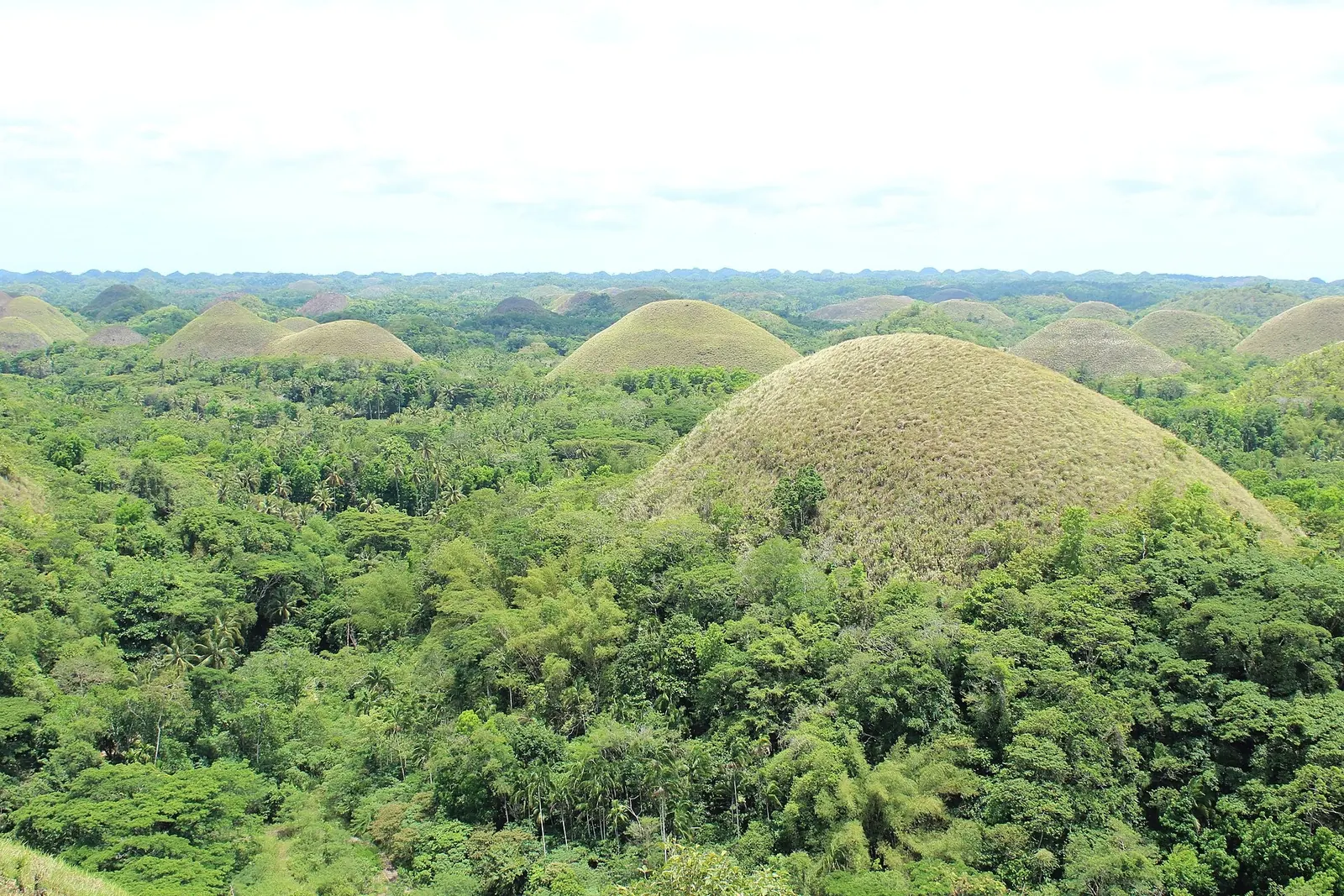
The Chocolate Hills are Bohol’s best-known geological image, but the island’s story extends beneath the surface and out to sea. In 2023, Bohol Island became the Philippines’ first UNESCO Global Geopark.
A geopark is concerned with geological heritage and the communities living within its landscape. It is a different UNESCO designation from World Heritage status. In Bohol, it creates a framework for reading familiar attractions as related parts of an island.
Limestone above and below the water
UNESCO’s description connects the Chocolate Hills with a wider karst landscape: limestone shaped into hills, caves and depressions. The geopark also includes marine environments, among them the Danajon Double Barrier Reef.
The connection between rock and water is more useful than an isolated hill count. Limestone landscapes contain surface scenery and underground systems; what happens on land can matter beyond the boundaries of a single visitor site.
Choose stops that explain these relationships. At a viewpoint, look for interpretation of the rock itself. At a cave or marine site, follow the applicable access rules rather than assuming that geopark recognition opens every area to unrestricted entry.
An earthquake remembered in a museum
The National Museum in Tagbilaran adds a human timescale to the geological story. It occupies the former provincial capitol, constructed between 1855 and 1860. The building was damaged in the magnitude 7.2 earthquake of October 15, 2013, transferred to the museum in 2014 and restored before opening as a museum in 2018.
Its exhibitions include Pagbanhaw, concerning the earthquake and Bohol’s recovery, and Pagpauli, devoted to National Artist Napoleon Abueva. Natural-history displays provide another route into the island’s environment.
These galleries prevent a journey through Bohol from becoming only a sequence of outdoor photographs. A damaged and restored civic building shows how geology affects daily life, architecture and memory.
Plan a museum stop before or after visiting the hills. The combination encourages a more complete view of Bohol: a living island shaped by long geological processes, sudden events and the work of people who rebuild.
Research note: This regional guide was expanded with AI assistance and checked against the sources below. It is source-based writing, not a claim of first-hand reporting. Confirm current access arrangements before traveling.
Join the conversation
Sign in to comment