
Eastern Samar: History along the Pacific Coast
Homonhon’s encounter in 1521 and Guiuan’s restored church belong to different chapters of the province’s history.
Eastern Samar’s coast appears in accounts of the Magellan–Elcano expedition, but its history did not begin when European ships arrived. Homonhon is better understood as a place of encounter between visitors and people already living in the archipelago.
The National Historical Commission’s marker at Pagbabangnan dates the expedition’s landing on Homonhon to March 17, 1521. It records contact and an exchange of gifts the following day, a period of rest and recovery, and departure on March 25.
An encounter, not an empty shore
That sequence matters. A landing is one event; the relationships formed afterward are another. Reading the marker through the exchange it describes gives local people a place in the narrative rather than reducing them to the background of a voyage.
Homonhon and the Guiuan mainland should also be planned as separate destinations. A historical route on a map does not remove the need to arrange a sea crossing, local guidance and sufficient time for the return.
Ask guides how the event is remembered locally and distinguish those memories from the particular dates established in the historical marker.
A church rebuilt after disaster
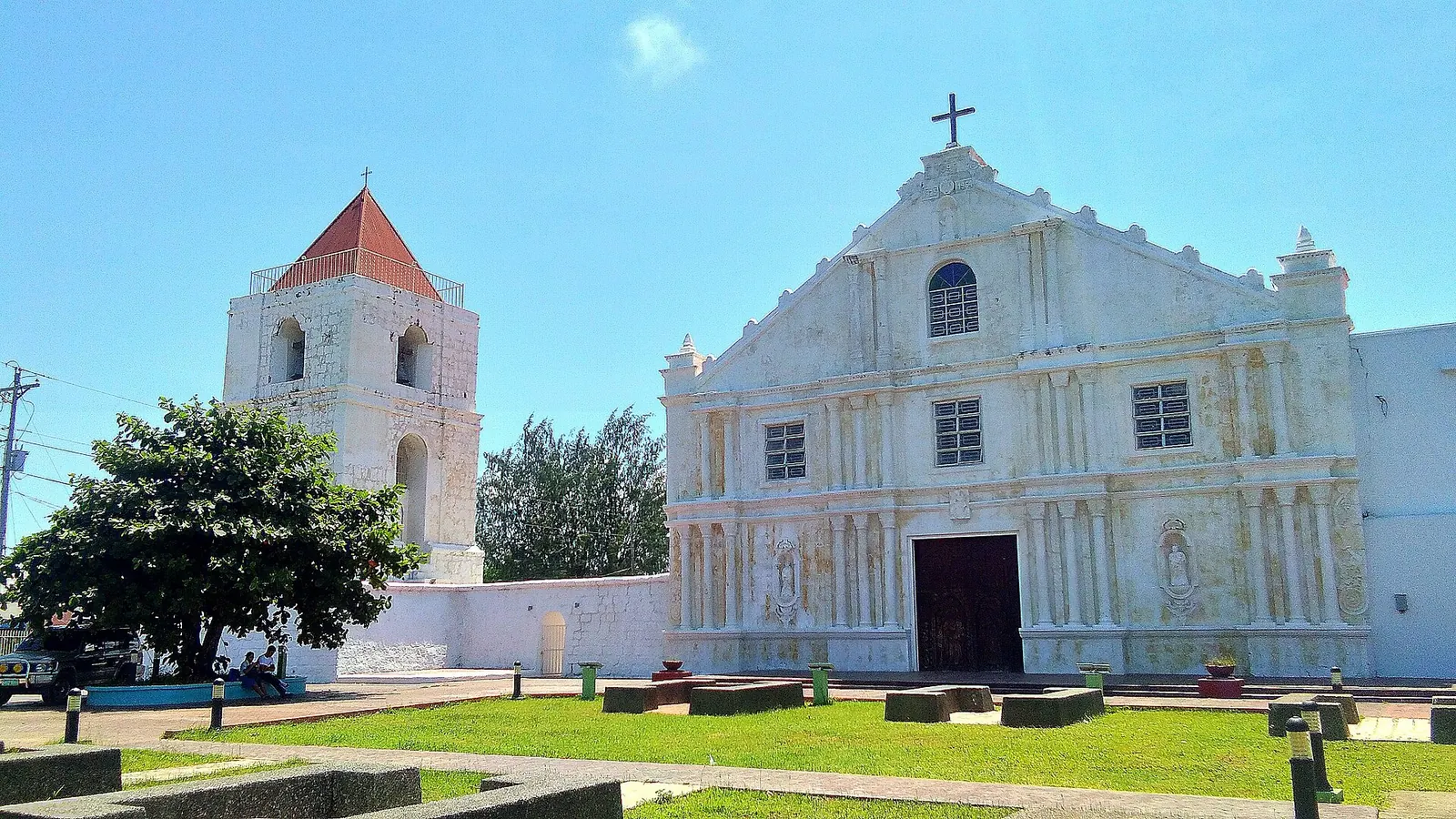
On the mainland, Guiuan Church tells a later story. The commission dates its stone construction to 1718 and records major nineteenth-century alterations, including work on the roof and bell tower.
The church was declared a National Cultural Treasure in 2001. Typhoon Yolanda damaged it on November 8, 2013. The National Museum carried out restoration between 2016 and 2019, and the restored church was inaugurated on December 8, 2019.
Calling the building simply “centuries old” leaves out this recent chapter. What visitors see is also the result of conservation work and a community’s recovery from a destructive storm.
At the church, read restoration information alongside architectural details and leave worshippers space to use the building. At Homonhon, approach the commemorative site as part of an inhabited island.
Together, the two places offer a history of arrivals, local encounters, religious change and rebuilding. Their value is greater when those layers remain visible.
Research note: This regional guide was expanded with AI assistance and checked against the sources below. It is source-based writing, not a claim of first-hand reporting. Confirm current access arrangements before traveling.
Join the conversation
Sign in to comment