
Corregidor: The Island That Still Guards Manila’s Memory
Beyond Corregidor’s guns and ruined barracks lies a human history of nurses, prisoners and return—and a reason to visit with care.
At the entrance to Manila Bay, Corregidor invites a military metaphor. It was a guard post, a fortress, a sentinel. Yet the most revealing way to understand the island may be to set the weapons aside for a moment and consider the people who depended on them: defenders waiting for relief, nurses tending casualties and prisoners facing a future they could not control.
Calling Corregidor forgotten captures a feeling that ruins can produce. It is less accurate as a description of a place that continues to be commemorated, studied and visited. The better question is what we remember when we go—and what disappears when a complicated island becomes only a backdrop for photographs.
Why this island mattered
The National Historical Commission’s Corregidor marker record places the island within a much longer history than the Second World War. Under Spanish rule it served several functions, including defense, navigation and the supervision of shipping. Its position at the mouth of Manila Bay made it valuable to successive authorities.
The same marker connects the wartime island to the Philippine Commonwealth government. President Manuel Quezon’s second inauguration took place there in December 1941, as war forced the government away from Manila. Corregidor was therefore not simply a remote American garrison. It was also a place where Philippine political life continued under extreme pressure.
For an international reader, that distinction is essential. Maps of campaigns can make the Philippines appear as a set of strategic positions between larger powers. An account centered only on those maps risks overlooking the country whose cities, institutions and communities were being transformed by the fighting.
Malinta Tunnel was also a hospital
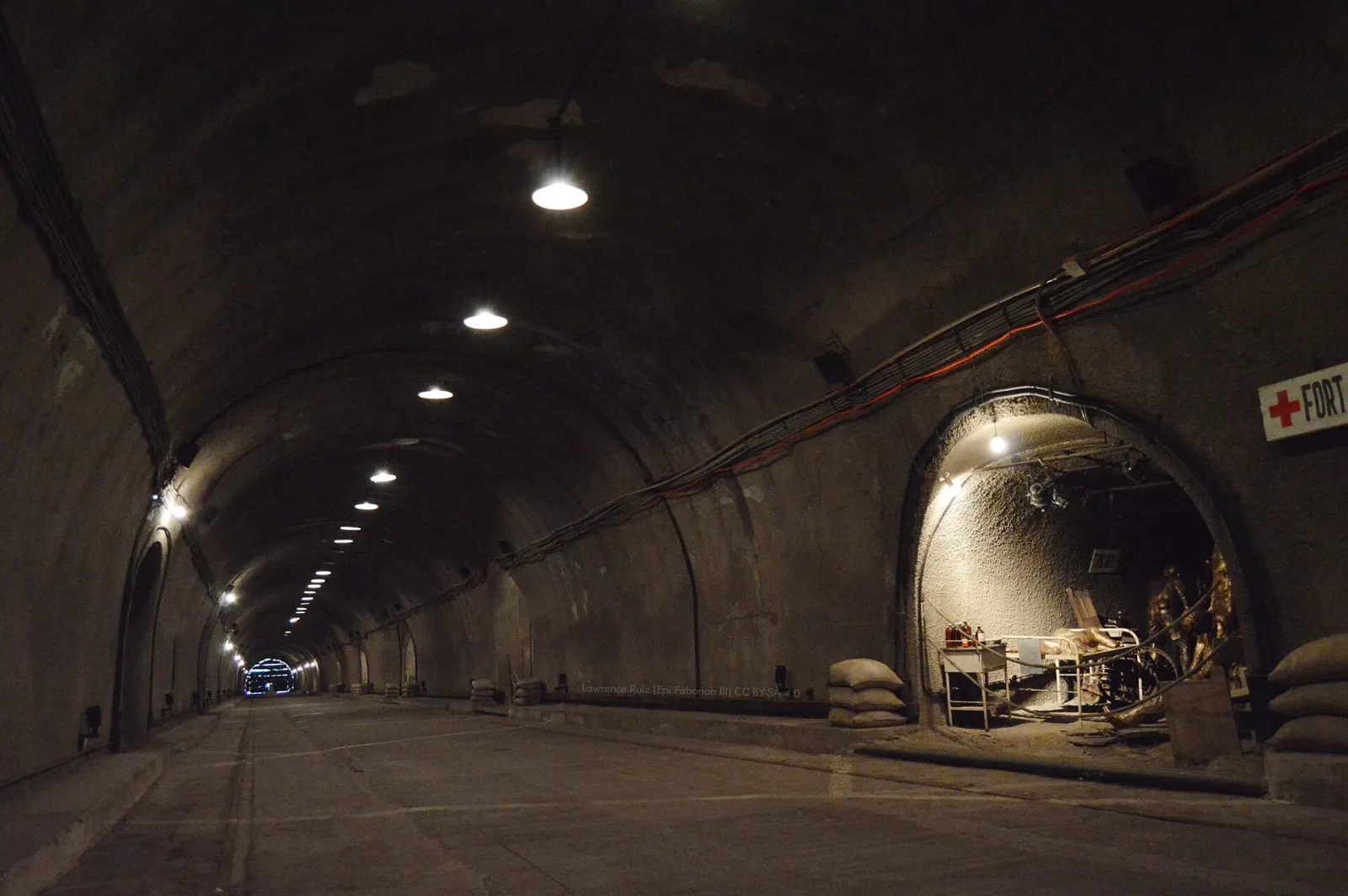
A tunnel is easy to describe as a feat of protection. It is harder, and more necessary, to imagine what protection could feel like when it meant crowding, limited air and a continuous demand for medical care.
The U.S. Department of Veterans Affairs’ biography of Army nurse Earlyn Black Harding offers one way into that history. Harding reached the Philippines in June 1941 and worked on Corregidor. The account describes the transfer of medical operations into Malinta Tunnel after the outbreak of war, where a hospital of roughly 1,000 beds functioned in difficult underground conditions. Harding continued caring for patients after the surrender and became a prisoner of war.
Her experience changes the scale of the site. A visitor can look at a passage as engineering, but also as a workplace where exhaustion and responsibility existed together. The tunnel’s importance includes the labor of people keeping others alive, not only the commanders sheltering within it.
An exhibit can suggest the arrangement of a ward; it cannot reproduce the experience of being treated there. Leave that distance intact. Understanding does not require turning another person’s suffering into an immersive adventure.
The surrender was a beginning for prisoners
Corregidor fell on May 6, 1942. A campaign chronology can mark that date and move on. For those taken prisoner, it opened another chapter.
In an account preserved by the Corregidor historical archive, Major Arthur C. Peterson of the 60th Coast Artillery described the surrender and its immediate aftermath. Such testimony brings attention to the uncertainty and loss of control that followed the end of organized resistance. It is a participant’s account, to be read as an individual perspective rather than as the experience of every captive.
This is a useful discipline for visitors: ask what kind of evidence is in front of you. A military order, a nurse’s biography, a memorial inscription and a veteran’s recollection answer different questions. None should automatically stand in for all the others.
The same care applies to nationality. Filipino and American experiences intersected on the island without becoming identical. Respectful remembrance leaves room for that complexity rather than placing every person in one heroic, anonymous crowd.
The return in 1945
The recapture also deserves more than a single triumphant date. The Airborne and Special Operations Museum’s account describes the February 16, 1945 airborne assault by the 503rd Parachute Infantry and the accompanying amphibious operation. Corregidor was attacked from the air and sea; the island’s geography shaped the risks of both approaches.
The National Museum of the U.S. Air Force explains that overcoming the defenders took approximately two weeks after those initial landings. The MacArthur Memorial’s photographic collection preserves images of the campaign and the March 2 flag-raising ceremony.
Seen together, these records distinguish an assault, a period of fighting and a public act of commemoration. A photograph of a raised flag has enormous symbolic power. It should not flatten the days before it into a painless return.
Nor does recapture erase surrender. The island’s history contains both, along with captivity, loss and reconstruction. A worthwhile visit allows those chapters to coexist.
Reading the barracks without turning ruins into scenery
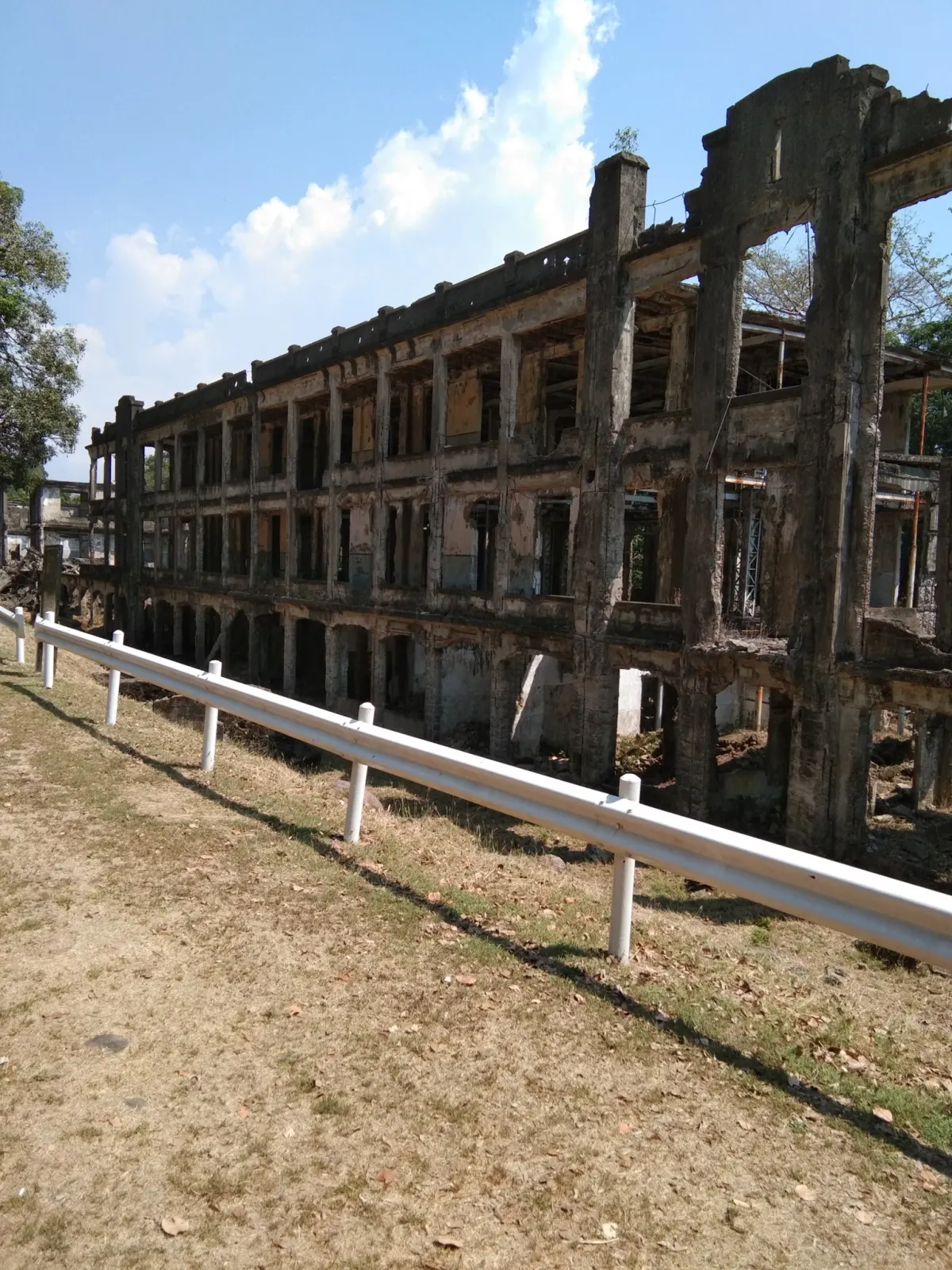
The ruined barracks make destruction visible in a different way from a written casualty figure. Repeated openings, broken edges and exposed spaces show how a building once organized for everyday occupation can survive as a shell.
Photographing such structures need not be disrespectful. The question is what the image asks the viewer to notice. A caption can identify the place, distinguish an archival image from a present visit and connect the building with the wider history. Without that context, an image of war damage can become interchangeable with any atmospheric ruin.
Follow barriers and the guide’s instructions. Do not climb unstable structures or handle historical material for a better picture. Asking what is known about a particular building is more productive than assigning every damaged wall to the same event or repeating an appealing story that has no source.
Planning a visit: confirm the departure point
Do not build an itinerary around an old assumption that every tour leaves directly from Manila. One current operator’s frequently asked questions identifies Villa Carmen in Mariveles, Bataan, as its departure point and recommends advance arrangements. Another operator’s published packages distinguishes Bataan join-in trips from a direct-Manila arrangement requiring a large group.
These are examples of operators’ offers, not a guarantee of availability or an endorsement. Ask for written confirmation of the meeting point, boat arrangements, minimum group requirement, return time and cancellation policy. Check whether island transport, a guide and any tunnel component are actually included.
Also confirm food, drinking water and toilet arrangements instead of assuming every facility is operating. Describe any mobility limitations before booking; the word tour does not tell you how much walking, stepping or boarding a particular trip involves. Sea conditions can change a plan, so allow flexibility around an onward flight or long land journey.
What the sentinel guards now
A fortress is built to control an approach. A historic site does something less certain: it offers people the evidence from which they may choose to understand a past.
Corregidor’s continuing value lies in that opportunity. The guns explain strategy. The hospital stories explain care. The prisoners’ accounts explain what a surrender date cannot contain. Together they make the island larger than the familiar image of a lonely sentinel.
The task for a visitor is not to rescue a forgotten place with a photograph. It is to leave with a more precise memory than the one brought across the water.
Explore more Philippine history.
Reporting note: This AI-assisted historical feature draws on the linked institutional records and testimony, reviewed November 6, 2026. It is not an eyewitness tour review. Operator arrangements must be reconfirmed before travel; the photographs show the island in 2019.
Join the conversation
Sign in to comment