
Hanging Coffins of Sagada: Understanding a Sacred Landscape
Sagada’s cliffside coffins belong to a living community. A thoughtful visit begins with their cultural meaning and the guidance of local people.
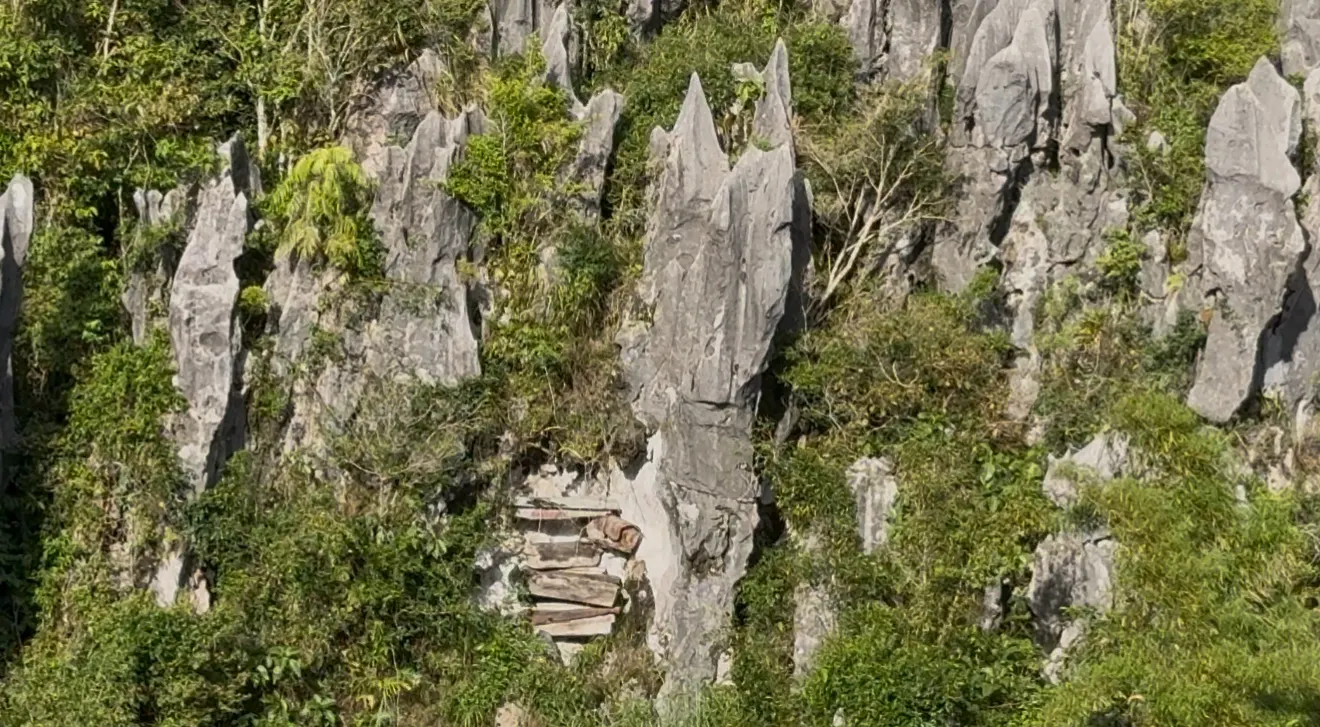
The hanging coffins of Sagada are striking because they change a visitor’s expectations of a burial ground. Wooden coffins rest against a cliff instead of beneath rows of headstones. The first response may be curiosity about how they reached that height. The more important question is what the place means to the people whose relatives are buried there.
In Sagada, Mountain Province, the landscape is inseparable from community life. A visit to the coffins should leave room for both: the physical setting that draws travelers and the relationships that make it sacred.
A burial tradition, explained with care
The municipality’s tourism registration portal presents the hanging-coffin tradition in relation to ancestral spirits and the belief that the deceased are brought closer to them. Such a brief description is a starting point. It cannot contain every family’s history or explain every part of a funeral practice.
Travel accounts identify the tradition with Sagada’s Kankanaey communities. AirAsia’s cultural feature also distinguishes hanging burials from cave burials, including those associated with Lumiang. The familiar image of coffins on a cliff is therefore one part of a wider funerary landscape.
Visitors should be cautious about turning one explanation into a universal rule. Ask a local guide what can be shared about the particular site, rather than expecting a single story to stand for every burial or every Indigenous community in the Cordillera.
What the coffins at Echo Valley reveal
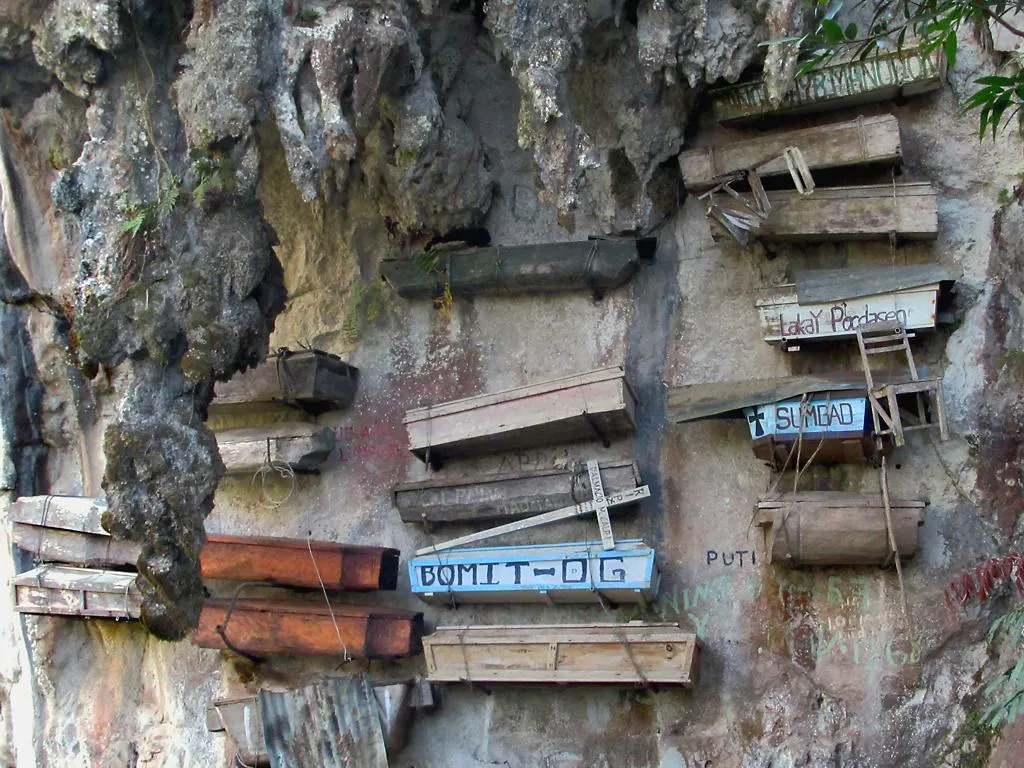
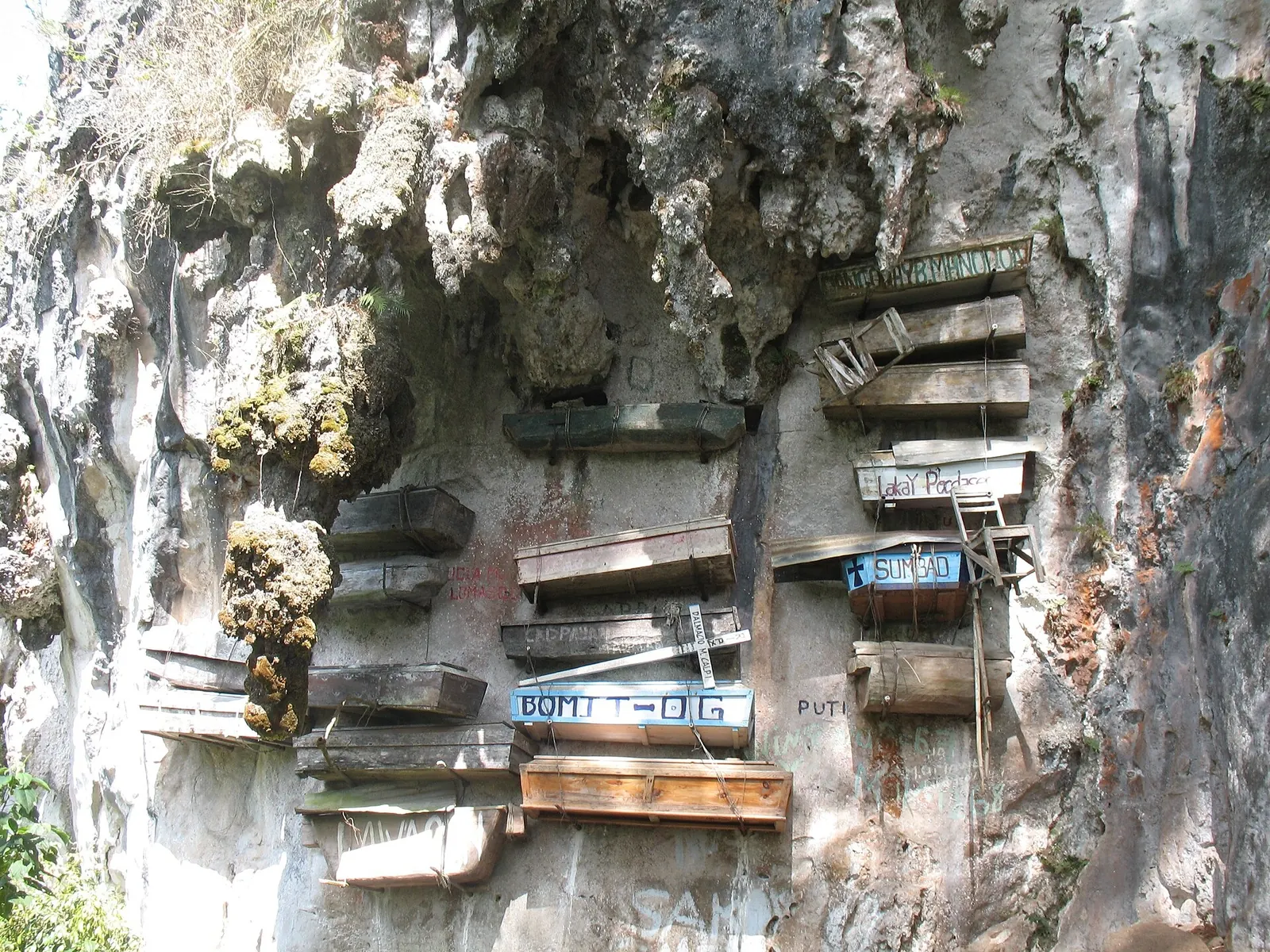
Echo Valley is the best-known viewing area for Sagada’s hanging coffins. Lonely Planet’s site guide notes that the coffins vary in age and that some of the smaller examples held bodies placed in a fetal position. It also identifies the chairs attached to the rock face as funerary chairs used during traditional rites.
These details can change how a visitor reads the scene. A small coffin should not automatically be assumed to belong to a child. A chair is not a decorative flourish. The objects have purposes within burial practices that deserve explanation rather than speculation.
The same guide notes crosses on newer coffins. Their presence is a reminder to leave room for the ways local people navigate belief and continuity. Communities do not stand still simply because visitors arrive looking for something ancient.
Arrange the visit through local guides
Start with the official Sagada Tourism Office for registration information, accredited guides and current access advice. Confirm which walking route is operating and what it involves before booking. Guides can explain the site and help visitors understand the conduct expected there.
Wear footwear suitable for walking and ask about steps, steep sections and conditions after rain. If mobility or endurance is a concern, describe it before choosing a route. A tour name or an attractive photograph does not tell you how a particular trail will feel underfoot.
Treat the burial area as you would a cemetery where a family may be grieving. Keep voices low, stay on permitted paths and do not touch coffins, climb toward them or move objects for a photograph. Ask before photographing people or any ceremony, and accept a request to stop without argument.
Getting to Sagada and arranging a guide
The municipal travel page identifies two public-transport options: CODA Lines from Cubao directly to Sagada via Nueva Vizcaya and Ifugao; or a journey to Baguio followed by a GL Trans bus along the Halsema Highway. Check the bus operator’s current terminal, departure and booking arrangements before paying. A route description is not a confirmed timetable.
A direct service reduces the number of transfers to arrange. A Baguio connection may suit a journey that already includes that city, but it adds a separate departure to coordinate. Decide which journey you are actually making before comparing fares; do not assume a late arrival in Baguio will connect with the next mountain bus.
The municipality provides a Sagada iPass registration portal. Keep the registration confirmation accessible, and arrange the walking tour separately with local tourism staff or an accredited guide organization. A registration receipt by itself does not describe a booked route, its difficulty or the people included.
The official tourism site lists the Sagada Genuine Guides Association (SAGGAS) at +63 995 090 7140, alongside other accredited organizations. The directory was checked October 26, 2026; this number has not been independently phone-tested. Ask for the current Echo Valley route, group limit, guide charge and any separate site charges.
Before confirming, describe who is coming, any mobility concerns, the date, and whether you want the hanging-coffin walk alone or other sites as well. Request the total charge and cancellation arrangement in writing. A longer tour is not automatically a better cultural visit; choose the route that leaves time to listen.
Make room for the town beyond the photograph
Sagada’s official travel guidance describes a mountain destination reached by land and cautions drivers about winding roads, steep sections, fog and possible landslides. Leave space in the itinerary for that journey instead of treating the town as a quick stop between photo opportunities.
The most worthwhile visit allows curiosity to become attention. Listen to the guide, ask respectful questions and remember that the people who welcome visitors also decide what parts of their culture they wish to share. The view may bring you to Sagada; that understanding is what gives the visit depth.
Explore more stories about Philippine culture, or compare the distinct UNESCO terrace clusters of Ifugao. Transport options, registration and guide-directory information checked October 26, 2026. Cultural references were reviewed October 22; current prices and trail conditions require local confirmation.
Join the conversation
Sign in to comment