
Ilocos Norte: Heritage Beyond the Highway
Paoay Church and Cape Bojeador Lighthouse reward a visit that asks what historic structures were built to do.
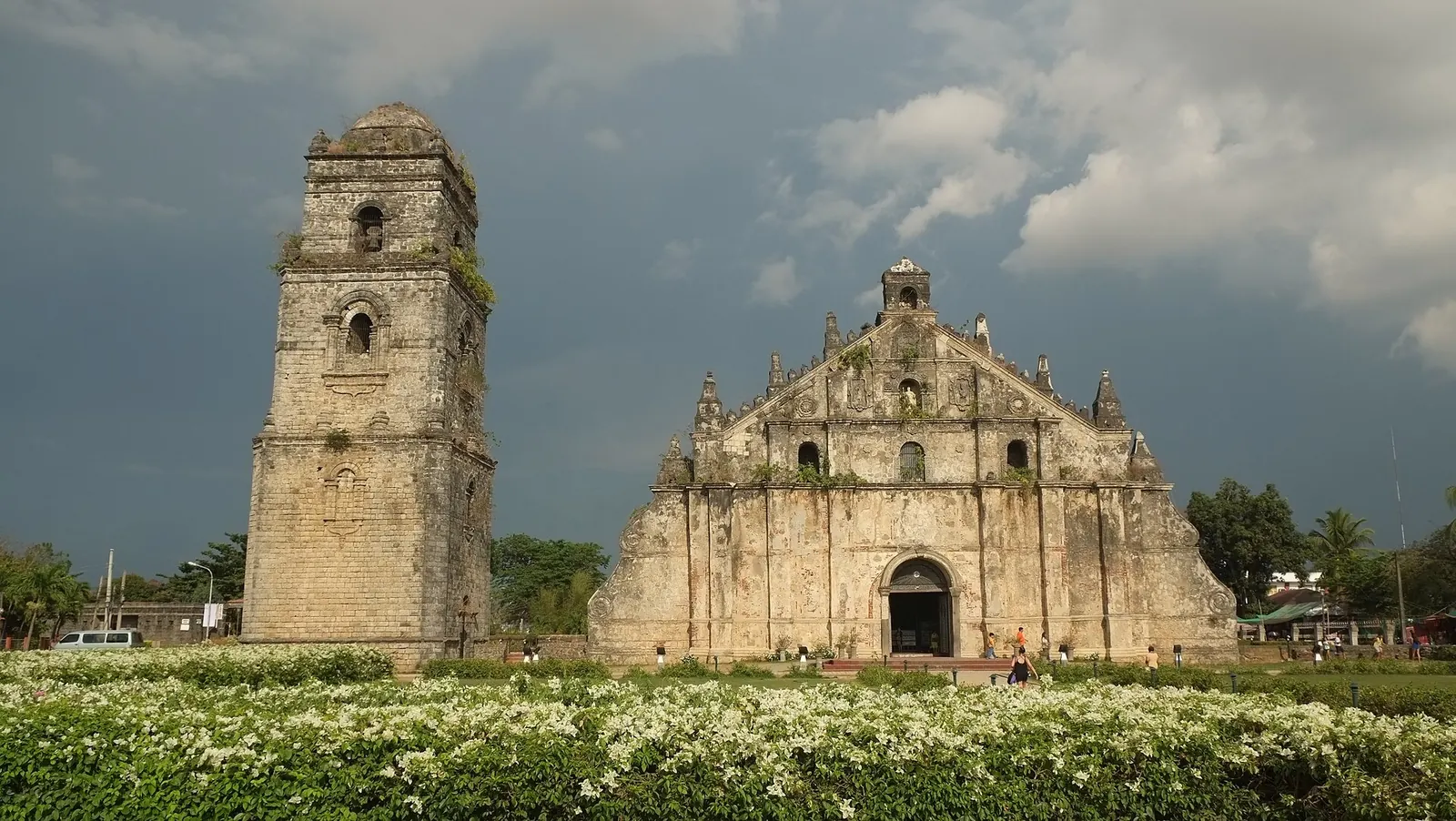
Two landmarks offer contrasting ways to read Ilocos Norte: a church serving a town and a lighthouse addressing ships offshore. Both can become quick roadside photographs. Their historical markers instead invite attention to purpose, construction and repeated use.
At Paoay, the National Historical Commission’s registry separates several dates often compressed into a single “age.” It records the founding of the Augustinian parish in 1593, the laying of the church cornerstone in 1704 and the tower cornerstone in 1793. A parish’s foundation is therefore not the same event as the construction of every part of its church complex.
A building with more than one history
The Paoay marker also records earthquake damage and repair, and the tower’s use as an observation post during the Philippine Revolution and the Japanese occupation. The structure’s story extends beyond its original religious purpose.
This is a useful way to approach a heritage building: identify which part is being described and which event a date refers to. A tower, nave and adjoining structure can have different histories. Repair should be understood as part of survival, rather than concealed behind the suggestion that everything remains untouched.
A light for the coast
In Burgos, Cape Bojeador’s marker credits Magin Pers y Pers with its 1887 design and Guillermo Brockman with the subsequent work. It records maritime service beginning in 1892. The complex includes a tower and pavilions on the hill of Vigia de Nagparitan.
The lighthouse’s elevation and coastal outlook were functional choices before they became attractions. Reading the view as a navigational landscape gives the visit a different focus: what could a ship see, and why was a signal needed here?
These sites can also teach visitors how to use historical markers. Check the marker’s issuing institution and date, then distinguish its documented events from a guide’s anecdote or a local tradition. Neither building needs an embellished claim to be compelling. Their documented changes already show how religious life, conflict and maritime movement shaped places that travelers now encounter from the road.
Research note: This regional guide was expanded with AI assistance and checked against the sources below. It is source-based writing, not a claim of first-hand reporting. Confirm current access arrangements before traveling.
Join the conversation
Sign in to comment