
Negros Occidental: The Stories within the Ruins
Talisay’s famous ruined mansion becomes more revealing when viewed alongside the sugar economy and surviving houses of neighboring Silay.
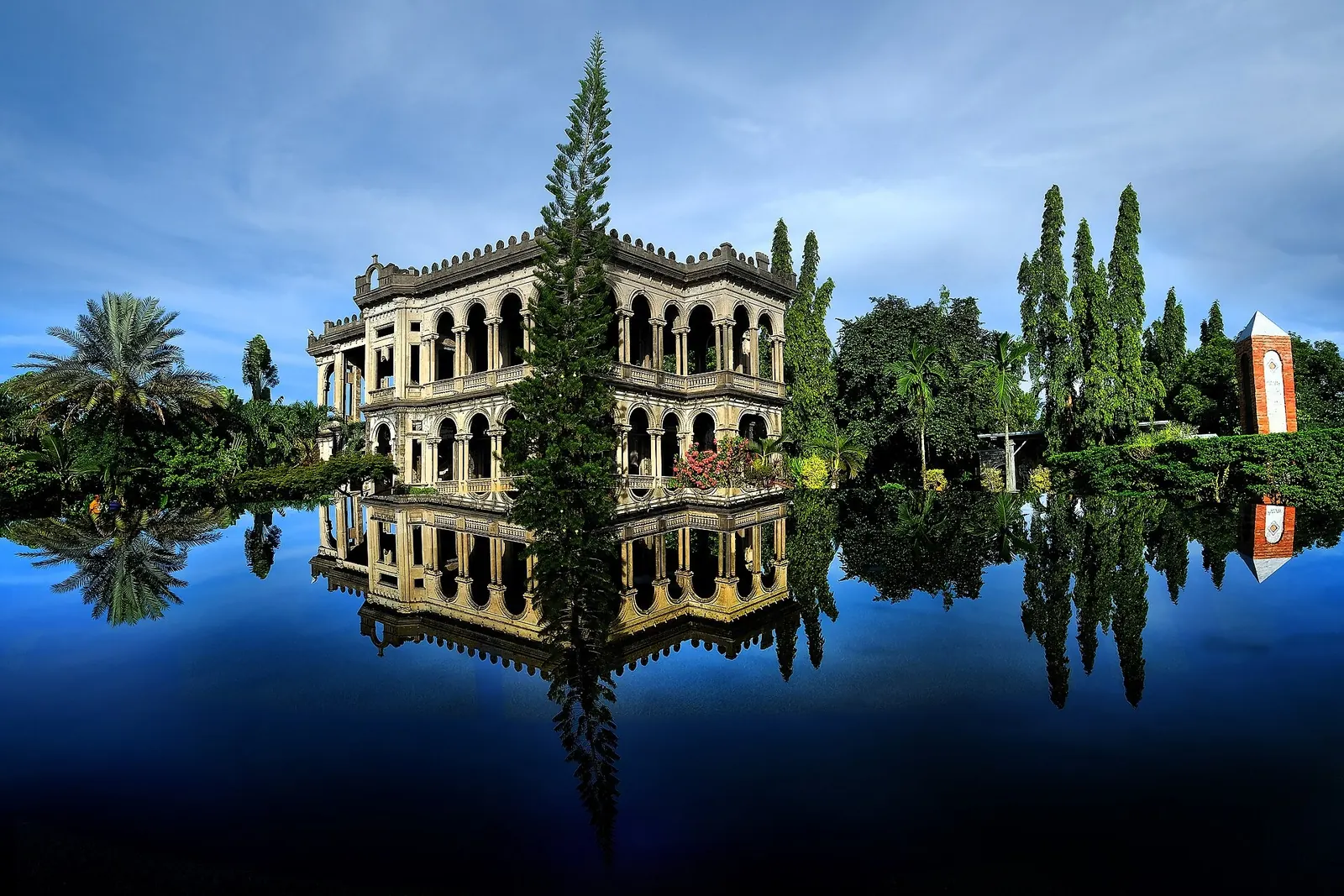
The Ruins stands in Talisay, Negros Occidental. Associated with the family of Mariano Ledesma Lacson and Maria Braga, the surviving mansion is often presented through a romantic story. Its architectural shell also invites a wider question: what kind of economy made such a residence possible?
Talisay’s local history places sugar cultivation and processing at the center of its development. That context connects a photogenic house with the surrounding agricultural landscape.
Beyond the mansion’s silhouette
The city government’s account identifies Talisay’s earlier name as Minuluan and dates its establishment as a town to September 20, 1850. It describes the expansion of sugar haciendas and the work of the Recollect priest Fernando Cuenca in improving milling.
Those details help explain why a visit to a grand residence should extend beyond its owners’ biography. Production, land and labor supported the wealth expressed in domestic architecture. A tour that discusses these relationships provides a fuller interpretation than a love-story nickname alone.
The city’s history also connects Talisay with Aniceto Lacson and the November 1898 uprising in Negros. Agricultural wealth, local leadership and political change intersected here; the mansion is one entrance to that larger history, not a complete account of it.
Compare a ruin with a surviving home
Nearby Silay offers a useful comparison. The National Historical Commission lists the Victor Fernandez Gaston Ancestral House, also known as Balay Negrense, as a heritage house, with a declaration dated March 8, 1994.
Seeing a preserved house alongside a roofless structure changes the questions a visitor asks. Where were people received? How were living spaces arranged? Which parts are original, repaired or interpreted for visitors? Museum labels and conservation information can distinguish these layers.
At The Ruins, ask a guide which details are supported by records and which belong to a story passed down within the family. Attractive anecdotes should not automatically become established architectural facts.
Give both Talisay and Silay room in the itinerary. Their houses can be appreciated for proportion, craft and beauty while also prompting a more demanding conversation about the society that built them.
Research note: This regional guide was expanded with AI assistance and checked against the sources below. It is source-based writing, not a claim of first-hand reporting. Confirm current access arrangements before traveling.
Join the conversation
Sign in to comment