
Romblon: The Marble Country
Romblon’s signature stone belongs to geology, sculpture and an industry deciding how its craft will continue.
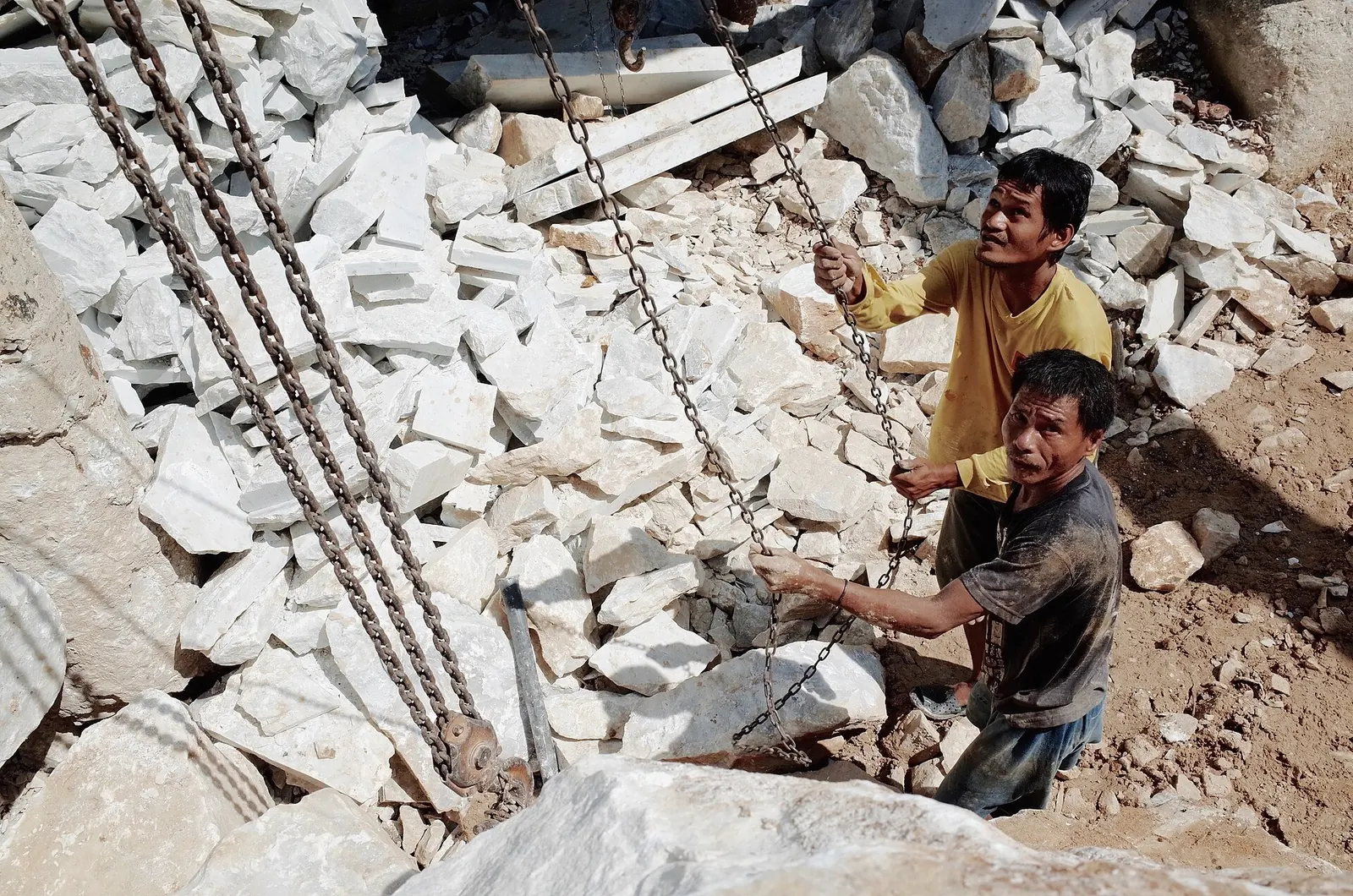
A polished marble object hides several stages of work: obtaining the stone, choosing a piece, shaping it and finishing its surface. Romblon’s reputation becomes more interesting when those stages are considered separately. A small souvenir and a large sculpture may share a material without sharing the same design process or amount of handwork.
The National Museum identifies Romblon marble as metamorphosed limestone. That geological description distinguishes the material from a manufactured surface merely decorated to resemble marble. It also offers a starting question for a purchase: what is this particular object made from, and where did its stone come from?
From material to artwork
Marble from Romblon appears in the National Museum’s presentation of sculptor Impy Pilapil’s work. Its Circa exhibition brings together pieces made between 1994 and 2017 using materials including marble, wood and stainless steel. The stone thus belongs to contemporary Philippine art as well as familiar craft and household objects.
Looking at a sculpture alongside a functional item invites a comparison of decisions. Which parts are polished? Where does the maker leave texture? How does a shape use the stone’s weight? These are more revealing questions than whether every object is “traditional.” A tradition can provide materials and skills while leaving room for individual invention.
A craft facing new tools
In August 2026, the Philippine Information Agency reported that DOST was preparing a robotics and automation project with the Romblon Marble Industry Cooperative. The proposed equipment included a robotic arm intended to assist carving, alongside training. The report described procurement and planned deployment—not proof that every workshop already uses the technology.
That distinction matters to the story of craftsmanship. Machine assistance need not erase design knowledge, but it changes which tasks are performed by hand. A buyer can ask a maker to explain those stages without treating either method as automatically more authentic.
For a workshop visit, arrange permission in advance and follow instructions around tools and work areas. For a purchase, ask who designed and produced it, how it should be cared for and how it will be transported. Such a conversation gives the object a traceable history rather than only a provincial label.
Research note: This regional guide was expanded with AI assistance and checked against the sources below. It is source-based writing, not a claim of first-hand reporting. Confirm current access arrangements before traveling.
Sources
National Museum: geology and paleontology collections
National Museum: Circa by Impy Pilapil
PIA: DOST’s proposed marble-industry technology project, August 2026


Join the conversation
Sign in to comment